


Athabasca Denesųłiné
Negotiation Type
Transboundary Negotiation
Negotiation Parties
-
Athabasca Denesųłiné (Saskatchewan)
-
Government of Canada
-
Government of the Northwest Territories (GNWT)
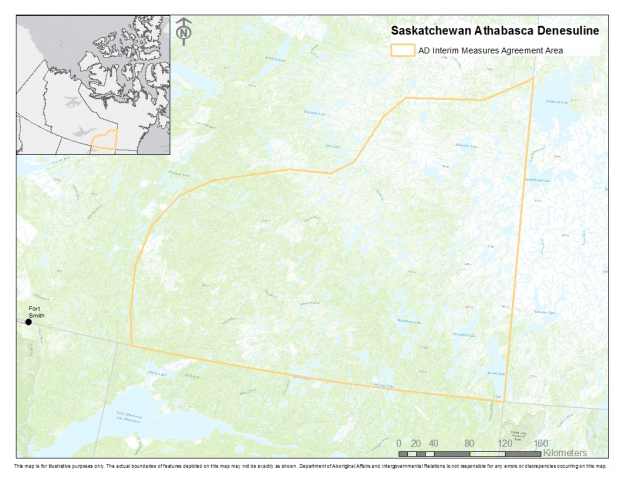
Overview
Canada is currently negotiating with the Athabasca Denesųłiné to find an out of court resolution to litigation initiated by the Athabasca Denesųłiné following the ratification of the Nunavut Final Agreement.
Frequently Asked Questions
1. Who are the Manitoba and Athabasca Denesųłiné?
The Manitoba and Athabasca Denesųłiné are a Dene people of Chipewyan ancestry living in Northern Saskatchewan and Northern Manitoba. There are 4,500 Denesųłiné currently living in five communities located in Northern Saskatchewan (Fond-du-Lac, Black Lake, and Hatchet Lake) and in Northern Manitoba (Lac Brochet and Tadoule Lake).
2. Who are the parties involved in the negotiations?
The parties involved in negotiations are the Manitoba and Athabasca Denesųłiné, the Government of Canada and the GNWT.
3. Why are the parties negotiating?
These negotiations stemmed from the 1991 Benoanie court case in Saskatchewan and the 1993 Samuel/Thorassie court case in Manitoba. The parties are negotiating Final Agreements to clarify and to provide certainty with respect to Athabasca Denesųłiné harvesting rights and to Manitoba Denesųłiné land and harvesting rights in the Northwest Territories (NWT).
4. What are the negotiations about?
These negotiations centre on Denesųłiné harvesting rights north of 60. The area, in which the Manitoba and Athabasca Denesųłiné assert harvesting rights in the NWT, is in the south eastern corner of the NWT.
5. What stage are the negotiations at?
All parties have initialled the agreement and are now in the process of ratifying the agreement. The Athabasca Denesųłiné are beginning community ratification to ask eligible voters to approve the agreement. If the vote is successful, then Canada will consider ratification, including the passing of federal legislation.
